
2489 0 comments

Latest



Natural Cork Coaster - 25pcs
₹999.00







Round Borosilicate Glass Teapot with SS Infuser - 550ml
₹1,399.00 ₹1,599.00
Nutrition & Diabetes Management
Cinnamon Green Tea and Diabetes: What the Research Says
By Sunil Pal · Health Is Wealth · Updated September 2026
Cinnamon green tea is a popular combination of two familiar ingredients: green tea leaves and cinnamon. Because both ingredients have been studied for their possible effects on glucose metabolism, many people wonder whether drinking cinnamon green tea can help manage blood sugar.
The answer requires some nuance.
Cinnamon and green tea have both been investigated in human studies, but the evidence does not establish cinnamon green tea as a treatment or cure for diabetes. Research on cinnamon has produced mixed findings, while studies of green tea have also reported inconsistent effects on markers such as fasting glucose and HbA1c. Importantly, there is limited evidence specifically studying the combination of cinnamon and green tea as a single beverage.
For someone living with diabetes, an unsweetened cinnamon green tea can be a flavorful, low-calorie alternative to sugary beverages. However, it should be viewed as part of an overall healthy eating pattern—not as a replacement for prescribed medication, medical care, physical activity, or an individualized diabetes-management plan.
Quick Answer: Is Cinnamon Green Tea Good for Diabetes?
Cinnamon green tea may be a reasonable beverage choice for people with diabetes when consumed without added sugar or other high-carbohydrate sweeteners.
- Not a treatment: Cinnamon green tea is not a diabetes treatment and must never replace prescribed medication.
- Sugar-free advantage: Drinking it without added sugar keeps the beverage relatively low in carbohydrates.
- Mixed clinical proof: Cinnamon has potential metabolic properties in trials, but the evidence is not strong enough to prescribe it as a glucose-lowering therapy.
- Natural caffeine: Green tea contains caffeine, so individual tolerance and timing matter.
- Professional guidance: People taking diabetes medication should discuss regular use of concentrated cinnamon products or supplements with their healthcare professional.
What Is Cinnamon Green Tea?
Cinnamon green tea is simply green tea infused with cinnamon.
Green tea comes from the leaves of Camellia sinensis and naturally contains compounds called catechins, including epigallocatechin gallate (EGCG), along with caffeine and other tea constituents. Explore the broader scientific foundation in our complete guide on green tea benefits for weight loss and health.
Cinnamon is the dried inner bark of trees belonging to the Cinnamomum genus. Two commonly encountered types are Ceylon cinnamon (Cinnamomum verum) and Cassia cinnamon, which includes several related species.
The combination is popular because cinnamon contributes a naturally sweet, warming aroma while green tea provides a fresh, slightly astringent taste. When prepared without sugar, honey, or syrup, cinnamon green tea can also be a useful alternative to sweetened tea, soft drinks, and other sugar-containing beverages.
Cinnamon and Blood Sugar: What Does the Research Say?
Cinnamon has attracted considerable scientific interest because laboratory and clinical studies have investigated its possible effects on glucose metabolism and insulin-related pathways. However, the evidence is not completely consistent.
A 2013 systematic review and meta-analysis of 10 randomized controlled trials involving 543 people with type 2 diabetes reported reductions in fasting plasma glucose and several lipid measures among participants receiving cinnamon. However, the analysis did not find a statistically significant reduction in HbA1c (Allen et al., 2013)[1].
More recent research has produced somewhat different results. A 2024 systematic review and dose-response meta-analysis of 24 randomized controlled trials reported statistically significant reductions in fasting blood glucose, HOMA-IR, and HbA1c with cinnamon supplementation (Moridpour et al., 2024)[2]. However, these studies investigated cinnamon supplementation, not necessarily an ordinary cup of cinnamon tea, and differences between studies make it difficult to translate the findings directly into a recommended beverage dose.
Other reviews have also found reductions in fasting blood glucose but emphasized substantial variation between studies.
What Does This Mean?
- Cinnamon is promising but not proven as a standalone treatment for diabetes.
- The amount, species of cinnamon, preparation, duration of use, and health status of participants can all differ between studies.
- A sprinkle of cinnamon in food or a cup of cinnamon tea should not be assumed to produce the same effects as the standardized cinnamon supplements used in clinical research.
Green Tea and Blood Sugar: What Does the Research Say?
Green tea contains catechins and other naturally occurring compounds that have been studied for their potential metabolic effects. Research in humans, however, is mixed.
A 2020 systematic review and meta-analysis of 27 randomized trials involving 2,194 participants found that green tea consumption produced a small reduction in fasting blood glucose but did not significantly change fasting insulin or HbA1c (Xu et al., 2020)[4]. The researchers concluded that longer and better-designed trials were still needed.
Another systematic review focusing specifically on people with type 2 diabetes found no significant effect of green tea supplementation on fasting plasma glucose, fasting insulin, HbA1c, or HOMA-IR (Asbaghi et al., 2021)[3].
In contrast, earlier meta-analyses noted modest improvements under specific conditions (Yu et al., 2017)[5]. The existence of differing systematic-review results is one reason it is better to describe green tea as an area of ongoing research rather than a proven diabetes therapy.
The Important Distinction: Much of the research involves green tea extracts, standardized catechin preparations, specific supplementation doses, or controlled clinical interventions. That is not necessarily equivalent to drinking one ordinary cup of brewed green tea.
Does Cinnamon Green Tea Lower Blood Sugar?
It may be tempting to assume that combining two ingredients studied for metabolic effects automatically creates a stronger effect. There is not enough clinical evidence to make that claim.
The existing research provides information about cinnamon and green tea separately, but this should not be presented as proof that a cinnamon-green-tea beverage produces a synergistic glucose-lowering effect. For example, frequently cited trials like Khan et al. investigated cinnamon alone in people with type 2 diabetes, rather than proving that cinnamon green tea as a combined beverage lowers HbA1c.
Therefore, claims such as:
- "Cinnamon green tea significantly lowers HbA1c"
- "Cinnamon green tea reverses diabetes"
- "Cinnamon green tea replaces diabetes medication"
- "Cinnamon green tea regenerates pancreatic beta cells"
should never be made.
Cinnamon Green Tea: Evidence at a Glance
| Ingredient / Question | What Research Suggests | What We Should Conclude |
|---|---|---|
| Cinnamon | Some trials and meta-analyses report reductions in fasting glucose | Promising, but results vary across studies |
| Cinnamon and HbA1c | Some newer analyses report improvement; older reviews found little significant effect | Evidence remains mixed and inconclusive |
| Green Tea | Some studies report small improvements in fasting glucose | Results for HbA1c and insulin resistance are inconsistent |
| Cinnamon + Green Tea Together | Limited direct clinical trials on the combined beverage | Do not claim proven synergistic effects |
| Unsweetened Tea | Provides a flavorful beverage without added sugars | Useful, practical alternative to sugary drinks |
| Cinnamon Supplements | Studied at concentrated doses differing from culinary tea use | Supplement findings should not be directly applied to tea |
Why Unsweetened Cinnamon Green Tea Can Be a Smart Beverage Choice
Even if cinnamon green tea is not a diabetes treatment, the way you prepare the drink matters. A cup of tea prepared with water, green tea, and cinnamon contains no added sugar unless you add a sweetener.
That makes it fundamentally different from sweetened chai, sugary bottled teas, sodas, and syrup-based drinks. For diabetes-conscious eating, replacing a sugar-containing beverage with an unsweetened drink is a practical, sustainable dietary change. The benefit here is primarily about the overall beverage choice, rather than claiming that the tea itself treats high blood glucose.
Cinnamon Green Tea Benefits: What You Can Reasonably Say
- 1. An Unsweetened Beverage Option: Plain cinnamon green tea adds botanical flavor without requiring sugar.
- 2. Naturally Sweet-Smelling Aroma: Cinnamon imparts a warm, aromatic flavor that makes unsweetened tea enjoyable without honey or syrup.
- 3. Naturally Occurring Polyphenols: Green tea supplies catechins and antioxidants being studied for metabolic and cardiovascular support.
- 4. Active Scientific Interest: Cinnamon continues to be investigated in clinical trials for its relationship with insulin pathways.
- 5. Fits a Balanced Routine: Supports broader lifestyle adjustments like stress management and regular activity — see our guide on stress and diabetes management.
How to Prepare Cinnamon Green Tea
You can prepare cinnamon green tea using either a small whole cinnamon stick or a pinch of ground cinnamon.
Ingredients:
- 200–250 ml fresh water
- 1 teaspoon loose-leaf green tea
- 1 small cinnamon stick (preferably Ceylon)
Step-by-Step Method:
- Heat Water: Bring fresh water close to boiling and allow it to cool slightly to around 80°C (176°F). Green tea generally tastes better and develops less bitterness when brewed below a full rolling boil.
- Infuse Cinnamon: Add the cinnamon stick to the hot water and allow it to steep for approximately 3–5 minutes to extract its sweet aromatics.
- Add Green Tea: Remove from direct heat and add 1 teaspoon of loose green tea. Steep for approximately 2–3 minutes.
- Strain: Remove the cinnamon stick and tea leaves using a stainless steel handle tea infuser or a borosilicate glass teapot.
- Drink Unsweetened: For a diabetes-conscious beverage, avoid adding sugar, jaggery, or syrup.
Can You Add Honey to Cinnamon Green Tea?
Honey is still a source of carbohydrate and sugar. The fact that honey is natural does not mean that it is carbohydrate-free. If your goal is to keep your beverage low in added sugars, unsweetened cinnamon green tea is the simpler option. If you choose to include honey, account for it as part of your total meal plan — read our detailed analysis on is raw honey safe for diabetic patients.
Ceylon Cinnamon vs. Cassia Cinnamon
The type of cinnamon matters, particularly if you consume it regularly in larger amounts. Ceylon cinnamon and Cassia cinnamon have different chemical profiles.
Cassia cinnamon generally contains substantially more coumarin, a naturally occurring compound that can be harmful to the liver when consumed in sufficiently high amounts over time. The National Center for Complementary and Integrative Health (NCCIH) notes that prolonged consumption of larger amounts of Cassia cinnamon can be a concern, particularly for people with liver disease[6]. In contrast, Ceylon cinnamon contains only trace amounts of coumarin.
Which Should You Choose? For ordinary culinary seasoning, cinnamon is generally considered safe. However, if you intend to brew cinnamon tea frequently or in larger quantities, Ceylon cinnamon is preferable due to its much lower coumarin content.
Cinnamon and Diabetes Medication: An Important Safety Note
If you take medication to lower blood glucose, do not use cinnamon as a substitute for your prescribed treatment. Some herbal products may interact with conventional diabetes medicines, and NCCIH specifically advises people using diabetes drugs to discuss herbal supplements such as cinnamon with their healthcare providers[7].
Exercise extra caution and speak with your doctor if you are:
- Taking insulin or oral hypoglycemic medications
- Experiencing episodes of low blood sugar (hypoglycemia)
- Considering concentrated cinnamon extract capsules
- Living with pre-existing liver disease
- Pregnant or breastfeeding
Cinnamon Green Tea vs. Sugary Tea
| Beverage Choice | Added Sugar Status | Diabetes-Conscious Option? |
|---|---|---|
| Unsweetened Cinnamon Green Tea | Zero added sugar | Yes (Excellent alternative) |
| Green Tea with Sugar | Yes (high sucrose) | Less suitable (spikes glucose) |
| Sweetened Traditional Chai | Usually high (refined sugar/jaggery) | Less suitable |
| Soft Drinks / Sodas | Very high (fructose corn syrup/sucrose) | Generally avoid |
| Tea with Added Honey | Yes (natural sugars) | Requires strict portion awareness |
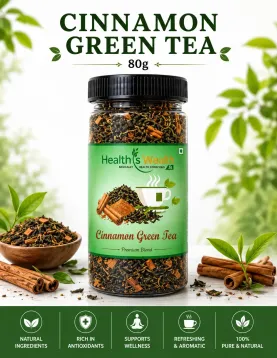
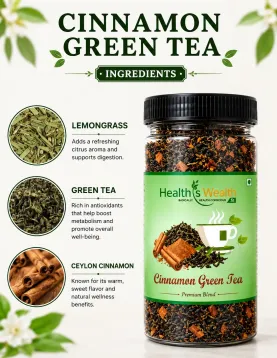
Cinnamon Green Tea 80g loose-leaf whole leaf green tea infused with warming cinnamon bark. Loose Green Tea Leaf Pure antioxidant-rich unoxidized green tea base for custom infusions. SS Handle Tea Infuser Durable fine-mesh infuser for steeping whole-leaf botanical blends. Blood Sugar Wellness Curated wellness teas and lifestyle tools for diabetic self-care.
Final Takeaway
Cinnamon green tea is an enjoyable beverage that can fit comfortably into a diabetes-conscious lifestyle, especially when prepared without added sugar. Cinnamon has been investigated for its potential effects on blood glucose, while green tea has also been studied for metabolic outcomes. However, the evidence is not consistent enough to describe cinnamon green tea as a proven treatment for diabetes.
The Complete Picture:
Balanced nutrition + physical activity + appropriate medication + regular monitoring + healthy lifestyle habits = effective diabetes management. No single tea can replace that foundation.
Frequently Asked Questions
About This Article & Editorial Standards
Published By: Health Is Wealth Editorial Team · Last Updated: September 2026
Editorial Approach: We explore the relationship between botanical ingredients and glycemic health using peer-reviewed medical research. Lifestyle practices and wellness teas are presented as supportive habits, not as substitutes for clinical diabetes care.
Scientific References & Clinical Sources
1. Allen, R. W., et al. (2013). Cinnamon Use in Type 2 Diabetes: An Updated Systematic Review and Meta-Analysis. Annals of Family Medicine, 11(5), 452–459. [DOI: 10.1370/afm.1517]
2. Moridpour, A. H., et al. (2024). The Effect of Cinnamon Supplementation on Glycemic Control in Patients with Type 2 Diabetes Mellitus: An Updated Systematic Review and Dose-Response Meta-Analysis of Randomized Controlled Trials. Phytotherapy Research, 38(1), 117–130. [DOI: 10.1002/ptr.8026]
3. Asbaghi, O., et al. (2021). Effect of Green Tea on Glycemic Control in Patients with Type 2 Diabetes Mellitus: A Systematic Review and Meta-Analysis. Diabetes & Metabolic Syndrome, 15(1), 23–31. [DOI: 10.1016/j.dsx.2020.11.004]
4. Xu, R., Bai, Y., Yang, K., & Chen, G. (2020). Effects of Green Tea Consumption on Glycemic Control: A Systematic Review and Meta-Analysis of Randomized Controlled Trials. Nutrition & Metabolism, 17, 56. [DOI: 10.1186/s12986-020-00469-5]
5. Yu, J., Song, P., Perry, R., Penfold, C., & Cooper, A. R. (2017). The Effectiveness of Green Tea or Green Tea Extract on Insulin Resistance and Glycemic Control in Type 2 Diabetes Mellitus: A Meta-Analysis. Diabetes & Metabolism Journal, 41(4), 251–262. [DOI: 10.4093/dmj.2017.41.4.251]
6. National Center for Complementary and Integrative Health (NCCIH). Cinnamon: Usefulness and Safety. [Resource Link]
7. National Center for Complementary and Integrative Health (NCCIH). Type 2 Diabetes and Dietary Supplements: What the Science Says. [Resource Link]
Medical Disclaimer: This article is intended for general educational and wellness information only. It is not medical advice and does not diagnose, treat, cure, or prevent diabetes or any other medical condition. Research discussed in this article includes studies of cinnamon, green tea, or their individual components. Findings from supplements, extracts, or isolated compounds should not automatically be interpreted as evidence that an ordinary cup of cinnamon green tea produces the same effects. If you have diabetes, take glucose-lowering medication, have liver disease, are pregnant or breastfeeding, or are considering concentrated cinnamon supplements, consult a qualified healthcare professional before making significant changes to your diet or supplement routine.
Tags:cinnamon green teadiabetes managementblood sugar controlinsulin sensitivityherbal remediesdiabetic drinksnatural healthgreen tea benefitsdiabetic-friendly drinksherbal tea for diabetes



Related Products


Sale
New

New

New
Write a comment