
948 0 comments
Latest



Natural Cork Coaster - 25pcs
₹999.00






Round Borosilicate Glass Teapot with SS Infuser - 550ml
₹1,399.00 ₹1,599.00
Ayurveda & Healthy Beverages
Kashmiri Kahwa in Ayurveda: Vata, Pitta & Kapha Guide
By Health Is Wealth Editorial Team · Updated August 2026
Kashmiri Kahwa is a traditional spiced green tea associated with Kashmir and the broader Himalayan region. Prepared with unoxidized green tea, warming spices, floral rose petals, and crushed almonds, Kahwa is valued for its distinctive fragrance, comforting warmth, and layered flavor.
From an Ayurvedic perspective, the individual ingredients used in Kahwa possess distinct qualities that interact with Vata, Pitta, and Kapha—the three primary Doshas. However, whether a particular cup is suitable depends on an individual's constitution, spice concentrations, brewing strength, season, and tolerance.
Modern clinical research has also investigated several individual Kahwa ingredients—including green tea catechins, gingerols, cardamom, cloves, and almonds—for their physiological properties. It is important to emphasize that evidence regarding isolated ingredients should not be interpreted as proof that drinking Kashmiri Kahwa cures or prevents medical conditions.
Key Takeaways: Evidence-Aware Ayurvedic Perspective
- Complementary Qualities: Blends warming spices (ginger, cloves, cardamom) with cooling florals (rose petals) and nourishing healthy fats (almonds).
- Dosha Alignment: Warm, aromatic preparations naturally complement cold and sluggish Vata and Kapha patterns. Pitta types benefit from milder infusions with prominent rose notes.
- Natural Composition: Contains naturally occurring green tea catechins (EGCG) and mild caffeine.
- Beverage, Not Medicine: Kashmiri Kahwa is a traditional wellness drink, not a clinical treatment for diabetes, metabolic dysfunction, or chronic disease.
What Is Kashmiri Kahwa?
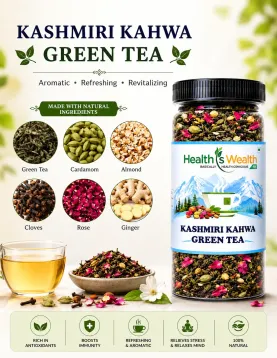
Unlike plain green tea, Kahwa is a complex botanical blend. While traditional recipes vary across households, the Health Is Wealth Kashmiri Kahwa blend focuses on 6 whole ingredients:
- Green tea (*Camellia sinensis*)
- Fragrant rose petals
- Green cardamom (*Elaichi*)
- Whole cloves (*Laung*)
- Crushed almonds (*Badam*)
- Dried ginger (*Sonth / Adrak*)
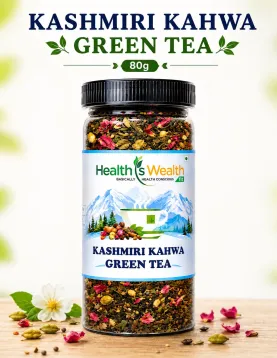
Explore our crafted Kashmiri Kahwa Green Tea to see the full leaf and spice composition.
Kashmiri Kahwa and Ayurveda
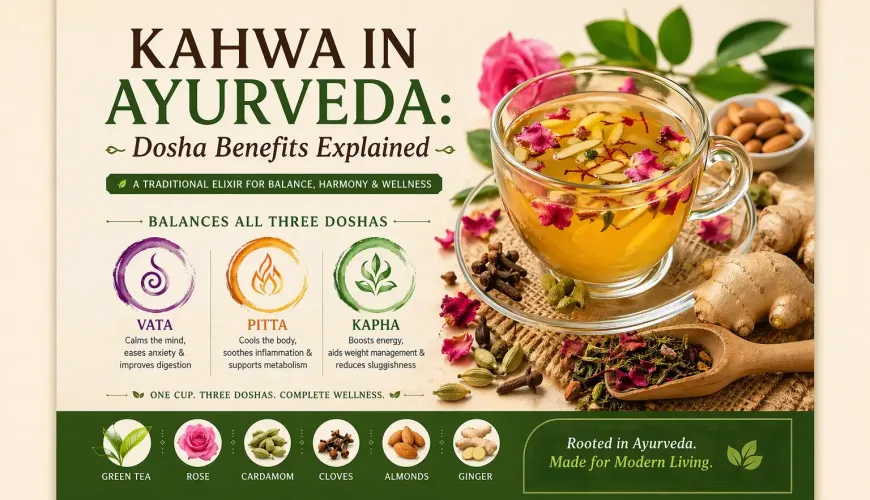
Ayurvedic dietary traditions classify foods and herbs according to their fundamental qualities (*Gunas*), tastes (*Rasa*), and energetic thermal effects (*Virya*). Kahwa combines botanicals with opposing yet harmonious qualities: ginger and cloves provide penetrating heat, rose petals introduce soothing coolness, almonds provide unctuous nourishment, and green tea contributes gentle stimulation.
Is Kashmiri Kahwa Tridoshic?
The term Tridoshic describes a preparation suitable for all three constitutional types. Because Kahwa incorporates both warming and cooling elements, it can be discussed in relation to all three Doshas. However, calling every cup universally Tridoshic is an oversimplification. The physiological effect varies based on brewing duration, spice ratios, individual digestion (*Agni*), and ambient weather.
Kashmiri Kahwa and the Three Doshas
1. Vata Considerations (Air & Space)
Vata is characterized by cold, light, dry, and erratic qualities. The warming aromatics of ginger and cardamom are traditionally considered complementary to Vata's cold qualities, while crushed almonds provide grounding healthy fats that soften Vata dryness. Those sensitive to caffeine should opt for shorter steeping times.
2. Pitta Considerations (Fire & Water)
Pitta governs heat, metabolism, and digestion. Because ginger and cloves possess inherent heat, a heavily spiced, boiling-hot Kahwa may not be ideal for everyone who is sensitive to heat. However, the inclusion of rose petals introduces natural cooling (*Sheeta*) and soothing qualities that temper the spices, making moderate, lukewarm infusions suitable for Pitta constitutions.
3. Kapha Considerations (Earth & Water)
Kapha is heavy, cool, and slow. The pungent and stimulating properties of cloves, ginger, and green tea cut through lethargy and respiratory heaviness. Consuming Kahwa warm without added sugar or honey fits naturally into a Kapha-balancing routine.
The 6 Ingredients: Ayurvedic Perspective
| Ingredient | Traditional Ayurvedic Qualities (*Guna / Virya*) | General Dosha Considerations |
|---|---|---|
| Green Tea | Light, dry; stimulating; astringent (*Kashaya*) | Beneficial in moderation; individual caffeine tolerance applies across all Doshas. |
| Rose Petals | Cooling (*Sheeta*), sweet, soothing (*Hridya*) | Traditionally associated with calming excess Pitta heat and emotional tension. |
| Cardamom | Aromatic, sweet, mildly warming | Tridoshic digestive; traditionally used to balance Vata and Kapha discomfort. |
| Cloves | Pungent, warming, penetrating (*Tikshna*) | Stimulates sluggish Kapha; requires moderation for heat-sensitive Pitta. |
| Almonds | Nourishing, grounding, unctuous (*Snigdha*) | Traditionally pacifies Vata dryness; adds caloric richness. |
| Ginger | Pungent (*Katu*), warming (*Ushna*), digestive (*Deepana*) | Kindles digestive fire (*Agni*); traditionally associated with Vata/Kapha considerations. |
*Note: Ayurvedic descriptions represent traditional qualitative frameworks and are not modern medical diagnostic classifications.
What Does Modern Research Say? (Evidence at a Glance)
| Ingredient | Investigated Compounds | State of Modern Clinical Evidence |
|---|---|---|
| Green Tea | Epigallocatechin gallate (EGCG), L-theanine, caffeine | Extensively studied for antioxidant activity, cardiometabolic markers, and cognitive alertness. Clinical results vary across populations. |
| Ginger | Gingerols, shogaols | Supported by systematic reviews of randomized controlled trials for managing mild nausea and aiding gastrointestinal motility. |
| Cardamom | Terpinyl acetate, 1,8-cineole | Investigated in clinical and animal trials for antioxidant and cardiometabolic parameters; more large-scale human research is needed. |
| Cloves | Eugenol, flavonoids | Strong preclinical evidence for antimicrobial and free-radical scavenging activity; human dietary trial data remains limited. |
| Rose Petals | Phenolic compounds, anthocyanins | Documented antioxidant capacity in laboratory models; specific clinical data on brewed rose tea remains emerging. |
| Almonds | Monounsaturated fatty acids, Vitamin E, magnesium | Established clinical evidence supporting healthy lipid profiles and satiety within balanced diets. |
*Evidence Note: Scientific findings regarding individual extracts do not prove that drinking brewed Kashmiri Kahwa treats, cures, or prevents any disease.
Potential Wellness Benefits
- Antioxidant Richness: Delivers green tea catechins and botanical polyphenols that help neutralize free radicals. Learn more in our detailed guide on green tea health benefits.
- Digestive Comfort: Ginger and cardamom have long histories of use for relieving post-meal bloating and sluggishness.
- Natural Alertness: Provides caffeine and naturally occurring L-theanine, which may contribute to alertness; individual responses to caffeine vary.
- Low-Sugar Beverage Alternative: When consumed plain, Kahwa provides rich flavor without the refined carbohydrates of sweetened drinks.
Digestion, Weight Management & Blood Sugar
Digestion
In Ayurveda, warming spices stimulate Agni (digestive fire). While modern research confirms ginger's role in gastric emptying, Kahwa should be viewed as a supportive dietary beverage rather than a cure for chronic acid reflux or gastrointestinal disorders.
Weight Management
Unsweetened Kahwa is low in calories. Green tea catechins combined with caffeine may modestly support resting energy expenditure, but long-term body composition depends entirely on overall diet, physical activity, sleep, and metabolic health.
Blood Sugar Support
Because unsweetened Kahwa contains zero added sugar, it integrates well into diabetes-conscious routines. For broader context on carbohydrates and glycemic health, read our guide on the truth about carbs and diabetes.
Caffeine Content and Timing
Because it is crafted with a green tea base, Kashmiri Kahwa contains mild natural caffeine. The actual amount of caffeine varies according to the quantity of tea used, brewing duration, and water temperature.
- Convenient Timing: Mid-morning or after a meal can be convenient times to enjoy Kahwa.
- When to Moderate: If you are sensitive to caffeine, avoid it close to bedtime. If prone to stomach sensitivity, avoid consuming strong tea on a completely empty stomach.
How to Brew Kashmiri Kahwa (With Dosha Adaptations)
A simple, balanced preparation method to optimize flavor extraction:
- Heat Water: Bring fresh water to a boil and allow the water to cool slightly to around 80°C (176°F) to produce a smoother, less bitter infusion.
- Measure: Add 1 heaped teaspoon of Kahwa blend per 200 ml cup.
- Steep: Allow the whole spices, green tea, and rose petals to steep for 3 to 4 minutes using a stainless steel handle tea infuser or a borosilicate glass teapot.
- Dosha Personalization:
- For Vata: Serve warm with a generous garnish of slivered almonds.
- For Pitta: Steep for a shorter duration (2–3 minutes), allow to cool to lukewarm, and enjoy the cooling floral notes.
- For Kapha: Enjoy hot and unsweetened for a more stimulating spice profile.
- Sweetening (Optional): If adding raw honey, allow the tea to cool to a warm, drinkable temperature first. In classical Ayurveda, honey should never be heated in boiling water.
Kashmiri Kahwa Tea 6-ingredient blend with rose petals, cardamom, ginger & almonds. Green Cardamom Pods Whole elaichi pods rich in aromatic digestive essential oils. SS Handle Tea Infuser Fine-mesh infuser built for whole botanicals and loose leaf tea. Loose Green Tea Leaf Pure unoxidized green tea base for custom daily wellness brews.
Who Should Exercise Caution?
- Nut Allergies: Traditional Kahwa blends contain almonds. Those with tree-nut allergies must verify ingredients before consumption.
- Caffeine Sensitivity: Those prone to anxiety or insomnia should moderate intake and avoid evening consumption.
- Pregnancy & Prescription Medications: Consult a qualified healthcare professional regarding personal caffeine thresholds and botanical interactions.
Traditional Ayurveda vs. Modern Research
Maintaining a clear distinction between traditional health systems and empirical clinical research is essential for informed wellness decisions:
- Ayurvedic Framework: Evaluates holistic relationships, thermal energetic properties (*Virya*), and constitutional balance (*Doshas*).
- Modern Medical Science: Examines quantifiable biochemical mechanisms, statistical significance, and randomized controlled trial data.
Both systems offer valuable insights, but traditional wellness traditions should complement—not replace—evidence-based clinical healthcare.
Frequently Asked Questions
About This Article & Editorial Standards
Published By: Health Is Wealth Editorial Team · Last Updated: August 2026
Editorial Approach: We clearly distinguish between traditional Ayurvedic frameworks and empirical scientific research. Natural botanicals and teas are presented as part of a supportive lifestyle, never as medical treatments or cures for clinical conditions.
Scientific References & Clinical Sources
1. Anh, N. H., et al. (2020). Ginger on Human Health: A Comprehensive Systematic Review of 109 Randomized Controlled Trials. Nutrients, 12(1), 157. [PubMed]
2. Cabrera, C., Artacho, R., & Giménez, R. (2006). Beneficial Effects of Green Tea—A Review. Journal of the American College of Nutrition, 25(2), 79–99. [PubMed]
3. Mancini, E., Beglinger, C., & Drewe, J. (2017). Green Tea Effects on Cognition, Mood and Human Brain Function: A Systematic Review. Phytomedicine, 34, 26–37. [PubMed]
4. Cortes-Rojas, D. F., de Souza, C. R., & Oliveira, W. P. (2014). Clove (Syzygium aromaticum): A Precious Spice with High Eugenol Potential. Asian Pacific Journal of Tropical Biomedicine, 4(2), 90–96. [PubMed]
5. Ashokkumar, K., et al. (2020). Cardamom (Elettaria cardamomum Maton): A Comprehensive Review of Its Biological Activities and Phytochemistry. Journal of Herbal Medicine, 24, 100398. [PubMed]
6. Berryman, C. E., et al. (2011). Effects of Daily Almond Consumption on Cardiometabolic Risk Factors. Journal of the American Heart Association. [PubMed]
Tags:Kashmiri KahwaKahwa TeaAyurvedaAyurvedic TeaDosha BalanceVata Pitta KaphaHerbal TeaGreen TeaWellness DrinksNatural DetoxHolistic HealthImmunity Boosting TeaDigestive HealthWeight Management TeaHerbal Infusion

Related Article


Related Products


New


New
New
New



Sale
New
Write a comment