
1238 0 comments

Latest



Natural Cork Coaster - 25pcs
₹999.00







Round Borosilicate Glass Teapot with SS Infuser - 550ml
₹1,399.00 ₹1,599.00
Turmeric Green Tea Benefits & Health Guide: Recipe, Risks, and Surprising Sexual Wellness Secrets
1. Introduction
In recent years, the wellness world has rediscovered the age-old combination of turmeric and green tea. Known for their impressive healing properties, both ingredients have been celebrated in ancient medicine and modern research alike. Turmeric green tea has gained global recognition not only as a delicious and soothing beverage but also as a powerful health tonic. This article will explore the perfect turmeric green tea recipe, the many health benefits of turmeric, the potential serious side effects of turmeric, and even the little-known turmeric benefits sexually.
2. The Power Duo: Turmeric and Green Tea
2.1 What is Turmeric?
Turmeric, a bright yellow spice derived from the root of the Curcuma longa plant, has been used in Ayurvedic and Chinese medicine for thousands of years. Its active compound, curcumin, is responsible for most of its health-enhancing properties, including anti-inflammatory, antioxidant, and antimicrobial effects (Aggarwal et al., 2007).
2.2 What is Green Tea?
Green tea is made from unoxidized leaves of the Camellia sinensis plant. Rich in polyphenols like catechins and EGCG (epigallocatechin gallate), green tea is well-known for its ability to improve brain function, assist in weight loss, and lower the risk of chronic diseases (Cabrera et al., 2006).
2.3 Why Combine Them?
The fusion of turmeric and green tea creates a potent antioxidant blend. While green tea enhances mental clarity and boosts metabolism, turmeric adds anti-inflammatory and immune-boosting benefits, making the combination a holistic health drink.
3. Turmeric Green Tea Recipe
3.1 Classic Turmeric Green Tea Recipe
Ingredients:
1 cup of water
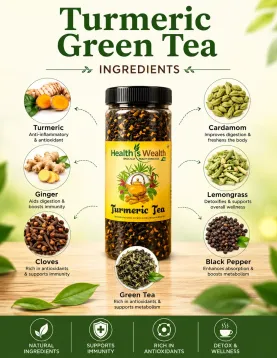
1 tsp loose green tea
½ tsp turmeric powder or 1-inch fresh turmeric root (grated)
Pinch of black pepper (enhances curcumin absorption)
1 tsp honey (optional)
½ tsp fresh lemon juice (optional)
Instructions:
Bring the water to a gentle boil.
Add turmeric green tea and simmer for 3-4 minutes.
Remove from heat and Steep for 3 minutes.
Add a pinch of black pepper, lemon juice, and honey.
Stir and enjoy warm.
4. Benefits of Turmeric Green Tea
4.1 Anti-Inflammatory Effects
Curcumin in turmeric and catechins in green tea reduce inflammation, which is at the root of many chronic diseases like arthritis, diabetes, and cardiovascular disorders (Jurenka, 2009).
4.2 Antioxidant Powerhouse
Both ingredients fight oxidative stress by neutralizing free radicals, potentially reducing signs of aging and lowering cancer risk (Gupta et al., 2013).
4.3 Immune System Support
Turmeric green tea supports immune function, helping the body fend off infections, especially during seasonal changes (Chainani-Wu, 2003).
4.4 Digestive Health Boost
Turmeric stimulates bile production, aiding digestion, while green tea soothes the gut and supports microbiome health.
4.5 Mental Clarity and Focus
Green tea contains L-theanine, which works synergistically with caffeine to improve cognitive function, while turmeric supports brain health by reducing neuroinflammation (Cox et al., 2015).
4.6 Weight Management and Metabolism
Green tea boosts metabolism and fat oxidation, while turmeric may prevent fat accumulation and insulin resistance (Hursel et al., 2009).
5. Turmeric Benefits Sexually: Fact or Fiction?
5.1 Hormonal Balance
Turmeric may help modulate sex hormones like estrogen and testosterone, potentially improving reproductive health (Kandhare et al., 2015).
5.2 Circulatory Health
Curcumin improves blood flow and endothelial function, which may enhance erectile performance and overall sexual health (Panahi et al., 2014).
5.3 Libido and Mood Enhancement
By reducing stress and anxiety, turmeric may support a healthy libido. Green tea’s calming properties complement this effect, creating a balanced mood conducive to intimacy.
6. Serious Side Effects of Turmeric
6.1 Medication Interactions
Turmeric can interact with blood thinners (e.g., warfarin), antacids, diabetes medications, and chemotherapy drugs (Lao et al., 2006).
6.2 Allergic Reactions
Some individuals may experience rashes, itching, or shortness of breath after consuming turmeric.
6.3 Gallbladder and Kidney Issues
Turmeric can exacerbate gallbladder problems or contribute to kidney stones due to high oxalate content.
6.4 Long-Term Overuse
Excessive consumption over months may lead to liver issues or iron deficiency by hindering absorption.
7. Who Should Avoid Turmeric Green Tea?
Pregnant or breastfeeding women
Individuals with gallstones or kidney stones
Those with turmeric or green tea allergies
8. Best Times to Drink Turmeric Green Tea
Morning: To jumpstart metabolism and boost energy
Afternoon: For focus and digestion
Before Bed (without caffeine): Use decaffeinated green tea to relax the body
9. Store-Bought vs. Homemade Turmeric Green Tea
| Aspect | Store-Bought | Homemade |
|---|---|---|
| Control over ingredients | Limited | Complete control |
| Additives/Preservatives | Often present | None |
| Cost | Higher | Lower |
| Freshness | Varies | Fresh every time |
10. Integrating It into Daily Life
Use it as a morning detox drink
Sip it post-meal for digestion
Pair it with yoga or meditation
Replace sugary beverages with this healthier option
11. Scientific Evidence and Research
Numerous studies validate the health effects of turmeric and green tea:
Turmeric’s anti-inflammatory effects are well documented (Aggarwal et al., 2007).
Green tea’s metabolism-boosting properties are supported by clinical trials (Hursel et al., 2009).
Curcumin’s role in sexual health and hormone modulation is under active investigation (Kandhare et al., 2015).
12. Frequently Asked Questions
Q1: What is the best turmeric green tea recipe?
→ A simple blend of green tea, turmeric, black pepper, and lemon is highly effective.
Q2: Can I drink it daily?
→ Yes, in moderation (1–2 cups/day) unless advised otherwise by your doctor.
Q3: Are there serious side effects of turmeric in tea?
→ Possible side effects include digestive upset, medication interactions, and hormonal imbalances in large quantities.
Q4: Is turmeric green tea good for sexual health?
→ Yes, it may support hormonal balance, blood flow, and libido.
Q5: Can turmeric green tea help in weight loss?
→ Yes, it may boost metabolism and reduce fat accumulation when combined with a healthy lifestyle.
13. Conclusion
Turmeric green tea is more than just a trendy drink—it's a powerful natural remedy that combines the antioxidant power of green tea with the anti-inflammatory magic of turmeric. While it offers numerous benefits, including support for digestion, immunity, mental focus, and even sexual wellness, it should be consumed mindfully due to potential side effects. Whether you're looking for a morning detox or a natural way to enhance your lifestyle, this golden elixir may be just what your routine needs.
References
Aggarwal, B.B., Sundaram, C., Malani, N., & Ichikawa, H. (2007). Curcumin: the Indian solid gold. Advances in Experimental Medicine and Biology, 595, pp.1–75.
Cabrera, C., Artacho, R., & Giménez, R. (2006). Beneficial effects of green tea – A review. Journal of the American College of Nutrition, 25(2), pp.79–99.
Chainani-Wu, N. (2003). Safety and anti-inflammatory activity of curcumin: a component of turmeric (Curcuma longa). The Journal of Alternative and Complementary Medicine, 9(1), pp.161–168.
Gupta, S.C., Patchva, S., & Aggarwal, B.B. (2013). Therapeutic roles of curcumin: lessons learned from clinical trials. The AAPS Journal, 15(1), pp.195–218.
Hursel, R., Viechtbauer, W., & Westerterp-Plantenga, M.S. (2009). The effects of green tea on weight loss and weight maintenance: a meta-analysis. International Journal of Obesity, 33(9), pp.956–961.
Jurenka, J.S. (2009). Anti-inflammatory properties of curcumin, a major constituent of Curcuma longa: a review of preclinical and clinical research. Alternative Medicine Review, 14(2), pp.141–153.
Kandhare, A.D., Raygude, K.S., Ghosh, P., Ghule, A.E., Bodhankar, S.L., & Natu, A.D. (2015). Therapeutic potential of curcumin in sexual health: A review. Asian Pacific Journal of Tropical Biomedicine, 5(7), pp.558–565.
Panahi, Y., Saadat, A., Beiraghdar, F., & Sahebkar, A. (2014). Adjuvant therapy with bioavailability‐boosted curcuminoids reduces symptoms and inflammatory indices in patients with knee osteoarthritis: a randomized double‐blind placebo‐controlled trial. Phytotherapy Research, 28(11), pp.1625–1631.
Lao, C.D., et al. (2006). Dose escalation of a curcuminoid formulation. BMC Complementary and Alternative Medicine, 6, p.10.
Tags:turmeric green tea recipeturmeric benefitsturmeric benefits sexuallyserious side effects of turmericturmeric teagreen tea recipehealth benefits of turmericherbal teanatural remediesturmeric drinkayurvedic teawellness teaanti-inflammatory teadetox teaturmeric for digestion

Related Article




Related Products


Sale
New



Sale
New


New



Sale
New
Write a comment